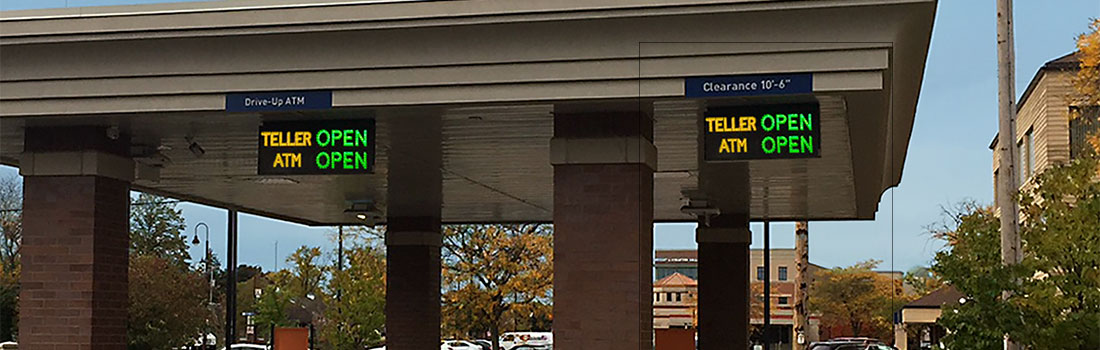
In the world of banking drive-thru services, clear communication and reliable visibility are essential. Whether guiding vehicles through teller lanes, highlighting ATM availability, or signaling open/closed status, illuminated signs must perform flawlessly day and night. That’s why many financial institutions choose low-voltage LED signs as a modern, energy-efficient, and dependable solution designed to meet high-demand environments.
What Exactly is a Low-Voltage LED Sign?
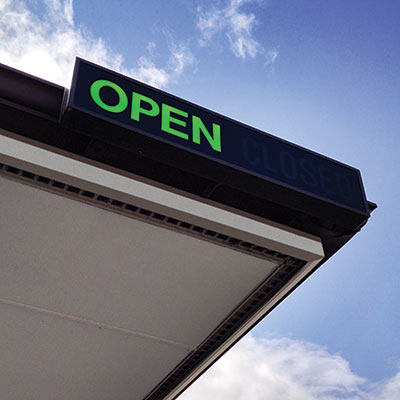
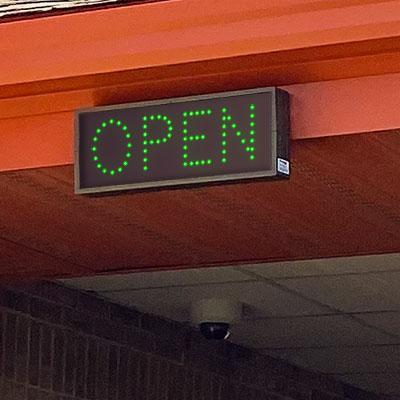
A low-voltage illuminated sign runs on 12 or 24 volts of DC power and uses highly efficient light-emitting diodes (LEDs) to display text, symbols, or signals. From “OPEN” indicators to lane control signage, these signs offer vibrant brightness and long-term reliability while consuming minimal energy.

Explore
All of Signal-Tech’s Banking
Drive-Thru Solutions
Why Low-Voltage Illuminated Signage is Ideal for Bank Drive-Thru Lanes
High Visibility in All Weather and Lighting Conditions
Drive-thru lanes need signage that’s easy to see in bright sunlight, rain, or nighttime darkness. Low-voltage LED signs deliver crisp, bright light that remains readable in any weather or lighting condition, ensuring customers never miss key information.
Energy Efficiency Lowers Costs
Banks typically keep their signage illuminated for long hours — often 24/7. LED signs consume up to 80 percent less energy than neon or incandescent alternatives, translating to significant utility savings year over year.
Enhanced Safety
Because these signs operate at a low voltage, they’re much safer to install and maintain, especially in outdoor or damp environments. This is critical in drive-thru setups where signs may be located near vehicles, walkways, or service windows. And because they’re low-voltage, the help of an electrician is not required for installation.
Built to Withstand Harsh Outdoor Environments
Drive-thru signage must withstand rain, snow, wind, heat, and vehicle exhaust. Low-voltage LED signs are solid-state devices with no filaments or glass tubes to break, and when housed in weatherproof enclosures, they offer exceptional durability and long service life.
Minimal Maintenance & Long Life Spans
Traditional bulbs burn out quickly, and neon tubes can crack or leak. LEDs last 50,000–100,000 hours, drastically reducing the frequency of repairs or replacements. This means fewer service interruptions and less downtime.
Clear Communication Reduces Confusion
Bank drive-thru lanes often have multiple lanes and a limited time to direct traffic. With low-voltage LED signs, you can display clear, dynamic instructions like “Lane Open,” “ATM Available,” or “Next Window Please” to streamline traffic flow and improve the customer experience.
The Eco-Friendly, Brand-Forward Choice
Today’s customers value sustainability. LED signs' low power consumption and long service life make them an environmentally responsible choice. Plus, they can be customized to reflect brand colors, fonts, and tone, creating a cohesive and professional image.

Learn
All the Ways Signal-Tech Serves
the Banking & Financial Industry
Keep These Things in Mind During the Buying Process
While the benefits of low-voltage LED signs are extensive, it’s also important to consider limitations. First, the initial or upfront cost for low-voltage LED signs may be higher than that of older illuminated signage. However, the long-term savings in energy and maintenance typically outweigh the initial investment. Then, voltage drops can occur in large banking campuses or multi-lane drive-thrus if the signs are far from their power source. A thoughtful wiring plan with the correct gauge wire will ensure signs retain consistent brightness.
Precision, reliability, and safety aren’t optional in banking drive-thru environments — they’re mission-critical. That’s why low-voltage LED signs might be the best option. With unmatched energy efficiency, visibility, and durability, they provide long-term value and performance in high-use, high-visibility applications.
Investing in low-voltage LED signs is a smart idea. If your institution is looking to modernize its signage or reduce operational costs while improving customer experience, contact Signal-Tech today!