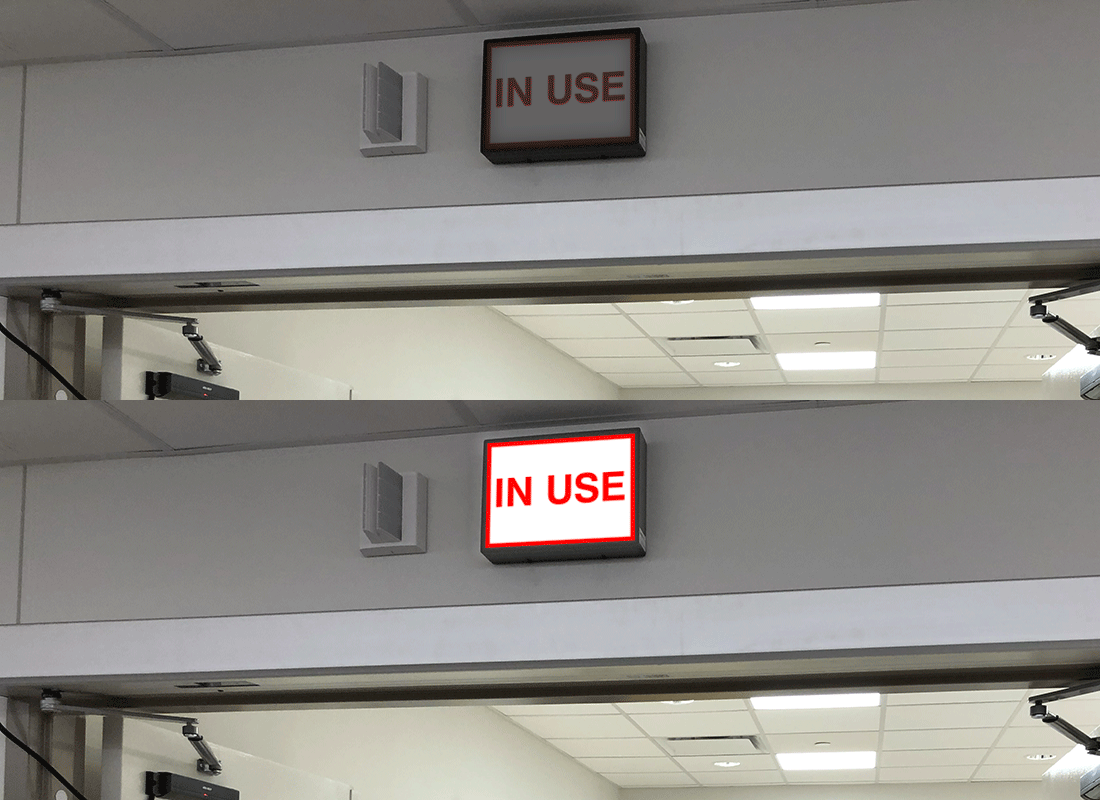
In the healthcare industry, trust is built on more than a handshake; it's built and reinforced every time a patient feels safe, respected, and protected. Privacy is a cornerstone of that trust, and it's under constant pressure in shared medical facility spaces where staff are stretched thin and patients move through multiple points of care in a single visit. One of the simplest — and most effective — tools to help maintain privacy and confidentiality is also one of the most overlooked: the in-use sign.
At first, it might seem like just another light or sign above a door. However, an in-use sign is more than a courtesy; it serves as a visual barrier that upholds patient dignity, reduces accidental interruptions, and reinforces compliance with Health Insurance Portability and Accountability Act (HIPAA) privacy standards. When implemented thoughtfully, it becomes a small investment that delivers measurable results in patient satisfaction, staff workflow, and operational efficiency.

Explore
All of Signal-Tech's Illuminated Signs
for Medical Facilities
Privacy is Paramount in Patient Spaces
Every exam room, consultation suite, and procedure area is a potential breach point for patient privacy. Unannounced entries, unclear room statuses, or confusion over occupancy can lead to awkward — even legally risky — situations. For instance, a nurse entering an exam room while a patient is being examined can not only cause discomfort but can also constitute a violation of privacy protocols.
This is where a simple illuminated in-use sign earns its keep. Positioned clearly above the door, it immediately communicates that a room is occupied or a procedure is in progress. It eliminates guesswork and encourages staff to pause before entering, ensuring that patient privacy remains intact without the need for constant verbal reminders or manual door signs.
How an Illuminated In-Use Sign Enhances Confidentiality
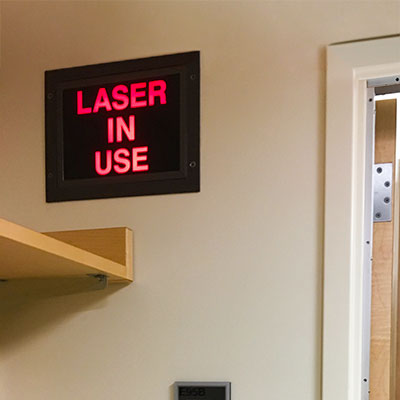
A well-placed in-use sign performs several essential functions that support confidentiality and efficiency:
- Prevents Interruptions: Staff can instantly recognize room status from a distance. Whether it's illuminated manually via a switch or tied into room controls, the indicator reduces unnecessary knocks or accidental entries.
- Supports Compliance: HIPAA mandates safeguards to protect patient information and privacy. While much of HIPAA focuses on data, physical privacy is equally critical. An illuminated in-use sign serves as a tangible, visible compliance measure.
- Improves Workflow: In larger facilities, communication between departments can be chaotic. Automated or networked illuminated signs linked to scheduling or room sensors streamline workflow by showing real-time room status without extra staff coordination.
- Enhances Patient Comfort: Patients notice when privacy is prioritized. Seeing a glowing in-use sign assures them that their exam or consultation won't be interrupted, contributing to a calmer, more professional environment.

Download
Signal-Tech's Illuminated Healthcare
Signage Brochure
What Illuminated Signs Do Healthcare Facilities Use?
Not all signs are the same. The needs of a radiology department differ from those of a general practitioner's office. Fortunately, LED signage offers flexible solutions:
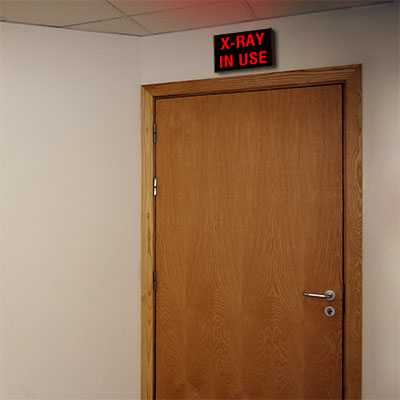
- Standard Single-Message Signs: These display a simple "In Use" or "Occupied" message, ideal for private exam rooms or small clinics.
- Dual-Message or Toggle Signs: Often reading "Vacant/In Use" or "Ready/Occupied," these models are perfect for multi-room facilities where space turnover is frequent.
- Custom LED Signs: Hospitals often opt for customized messages such as "Oxygen In-Use" or "Do Not Enter – Procedure Underway." These can include specific color cues (e.g., red for "off,” green for “on").
The shift from traditional incandescent signage to LED technology also brings clear advantages — lower energy consumption, longer lifespan, and crisp, readable illumination, even in brightly lit corridors.
Learn How
Long LED Signs Last
Energy Efficiency Plus Safety Equals a Win
Energy efficiency may not be the first thing associated with patient privacy, but it’s an essential part of facility operations. An LED in-use sign consumes up to 80 percent less power than traditional lighting options and requires minimal maintenance. Hospitals and clinics that run 24/7 benefit from reduced operational costs and fewer service interruptions.
Additionally, LED signs remain cool to the touch and are in sealed, easy-to-clean enclosures — critical features in sterile or sensitive environments.
Recommendations and Best Practices for Implementing Illuminated Signage
To get the most out of illuminated signs, medical facilities should consider placement, design, and integration:
- Visibility: Mount signs directly above or adjacent to doorframes where they’re visible from multiple angles.
- Consistency: Use uniform design and color codes throughout the facility so staff instantly understand the message.
- Automation: Tie signs into lighting or occupancy sensors where possible to reduce human error.
- Maintenance: Incorporate regular checks to ensure signs remain illuminated and readable.
A well-designed system of illuminated medical signage should feel intuitive; staff shouldn’t need to think twice about whether a room is available.
Ready
to Learn More About LED Medical
Signage? Contact Us!
Small Signs, Big Impacts
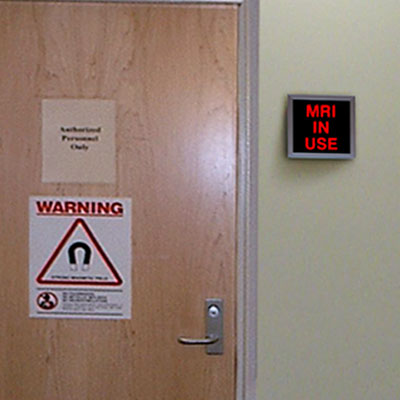
The healthcare industry often works with intensely complex technology — such as AI diagnostics, robotic surgery, and advanced imaging — but sometimes, the most powerful innovations are simple. An illuminated in-use sign may not make medical journal headlines, but it plays a quiet, indispensable role in upholding privacy, improving workflow, and demonstrating respect for patients.
In an era when every detail of the patient experience is scrutinized, from bedside manner to wait times, illuminated signage delivers a subtle but meaningful assurance: your privacy matters. Hospitals and clinics that invest in thoughtful signage solutions aren’t just following best practices; they're also enhancing patient care. They’re sending a clear message of professionalism and care, one glowing sign at a time.
For more information about LED medical signs, contact us anytime — our knowledgeable team is ready to help enhance patient privacy, safety, and operational efficiency with illuminated signage.