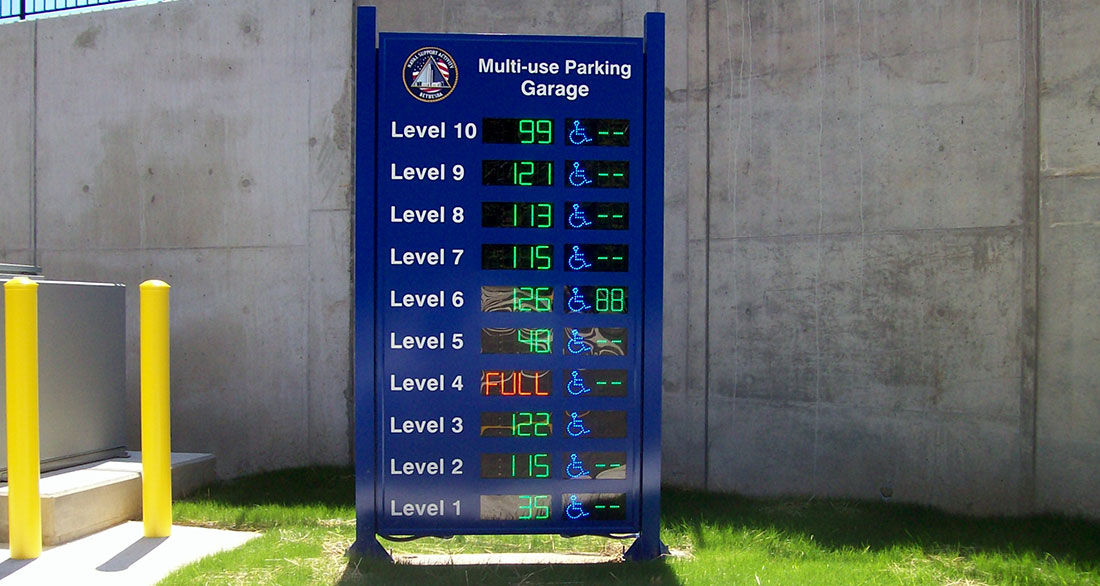
Think about that one coworker who causes chaos just by showing up late and clogging entrance ways. Congestion in parking facilities works the same way — slow, frustrating, and entirely avoidable with the right tools. That’s where parking guidance systems come to the rescue. These systems utilize LED signage and smart detection devices to streamline traffic flow, reduce bottlenecks, and provide drivers with real-time directions, eliminating guesswork. Let’s break down how modern parking solutions, especially LED signs and displays, are transforming parking operations and solving problems that traditional signs can’t touch.
The Problem with Traditional, Non-Illuminated Parking Signs
The dichotomy of static metal signs is that their biggest strength is also their fatal flaw: they don’t change. Whether a parking garage level is full, empty, or somewhere in between, every sign says the same thing. Drivers loop floors looking for open spaces. Traffic backs up at chokepoints. Frustrated drivers often start improvising, and this improvisation makes things worse for everyone.
In busy parking corridors, airport parking lots, hospital parking garages, and event center parking facilities, these inefficiencies can also result in significant financial losses. Every minute a driver spends hunting for a space increases emissions, slows turnover, and creates a bad first impression of the facility. The bottom line: static signs are a 20th-century tool trying and failing to manage a 21st-century problem.
How Parking Guidance Systems Work
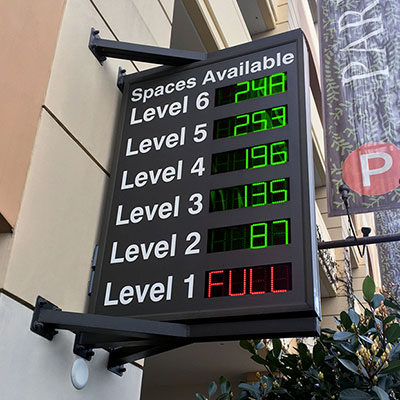
Modern parking guidance systems help eliminate guesswork and keep traffic flowing smoothly. Using sensors, automated counts, and networked LED signs, they monitor occupancy levels in real time and display those numbers exactly where drivers need them.
At a high level, here’s how the system runs:
- Entry-point detection tracks vehicles entering and leaving.
- Zonal or transition point sensors count occupancy in different zones
- LED signs update to show available spaces in each designated zone
- Central software distributes data and triggers LED sign updates
Instead of wandering aimlessly, drivers get clear, immediate guidance. This reduces circulating traffic, speeds up parking decisions, and lowers the overall load on the facility.

Learn About
Signal-Tech’s Automated Parking
Guidance System: RedStorm
Cutting Down on Congestion
Congestion isn’t just annoying for drivers; it’s expensive for parking facility operators. It slows throughput, disrupts schedules, and creates ripple effects throughout any campus or business district. By providing drivers with real-time information, parking guidance systems eliminate the aimless “search loop” that is responsible for most congestion. A Federal Highway Administration study indicates that up to 30 percent of urban traffic is attributed to vehicles searching for parking. When that inefficiency is removed, everything downstream moves smoothly.
LED dynamic signage doesn’t just point people in the right direction; it also prevents them from going where they shouldn’t. A single strategically placed digital sign can stop dozens of wrong turns per hour, clearing bottlenecks that static metal signs can’t address.
Reducing Stress and Improving the Driver Parking Experience
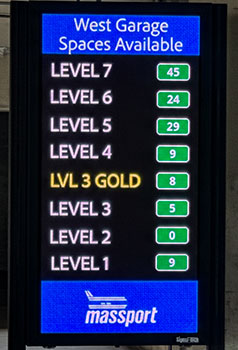
A parking experience sets the tone for an entire visit. If it starts with irritation, confusion, or wasted time, customers carry that frustration into the business they’re visiting and the experiences they’re having. Dynamic LED signage delivers guidance that gives drivers:
- Certainty – They know exactly where spaces are available
- Speed – They park and move on without the hassle
- Confidence – Signage is bright, visible, and impossible to misinterpret
Hospitals, airports, and municipal garages benefit immensely from this. When people are already rushed or stressed, the last thing they need is a scavenger hunt for a parking spot.

Download
Signal-Tech’s RedStorm Brochure
Enhancing Safety with Real-Time Information
Congested garages are slow, and sometimes, they can also be dangerous. Tight turns, limited visibility, and impatient drivers are a recipe for collisions. Dynamic LED signs used within parking guidance systems reduce risk by:
- Preventing sudden stops and reversals
- Steering drivers away from blocked lanes or maintenance areas
- Alleviating gridlock that increases the odds of fender-benders
- Improving visibility with bright, legible displays
The ability to instantly update capacity information creates a safer environment for both drivers and pedestrians.
Improving Operational Efficiency
For parking operators, the efficiency gains from parking guidance systems are substantial. Replacing outdated static signage with dynamic LED displays unlocks several improvements, including:
- Accurate occupancy reporting
- Reduced staffing needs at gates and choke points
- Lower maintenance costs due to LED longevity
- Better flow planning backed by data
- Higher revenue thanks to faster turnover and fewer blocked lanes
Managers also gain insights from data trends, such as peak times, slowdowns, and bottlenecks, which can be used to optimize layouts, signage placement, staffing schedules, and even pricing.
Explore
Signal-Tech’s Parking Industry
Solutions Catalog
Benefits to the Environment
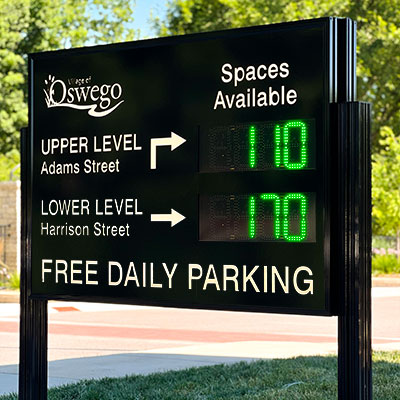
In addition to being a nuisance, congestion creates unnecessary pollution. Cars roaming garages burn fuel and pump emissions into enclosed spaces. By reducing search times and smoothing traffic flow, parking guidance systems decrease overall vehicle idling and circulating traffic. This leads to:
- Lower emissions
- Less energy usage for ventilation systems
- Reduced carbon impact per vehicle
The LED signs themselves also have extremely low power consumption, making them a clean, long-term solution.
Why LED Signs Paired with Parking Guidance Systems Are the Clear Winner
Static metal signs can’t react in real-time to changing conditions, but LED signs can. They communicate instantly, adapt automatically, and eliminate confusion. When combined with sensor-driven technology, they create a parking environment that is efficient, safer, and dramatically more user-friendly.
In short, parking congestion isn’t inevitable. It’s the result of outdated tools — tools that modern, dynamic systems can replace with stunning effectiveness. For more information about LED parking signs and parking guidance systems, contact us anytime — our knowledgeable team is ready to help enhance parking facilities with illuminated signage.