
An LED blank-out traffic sign can communicate a restriction or warning precisely when drivers need it. But selecting the right sign involves more than choosing a message and the correct cabinet size.
What should the sign display? When should it activate? And which MUTCD standards apply to the installation?
For transportation engineers, agencies, contractors, and sign specifiers, answering these questions early can help prevent specification errors, project delays, and unnecessary revisions. Here are five important considerations when specifying an LED blank-out traffic sign or requesting a quote.

Explore
Signal-Tech’s Illuminated Traffic & Transportation Signs
1 – What Message Should the Blank-Out Sign Display?
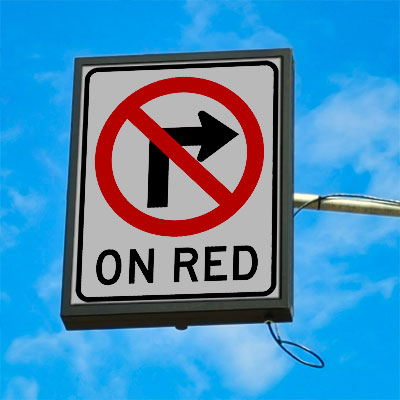
Unlike conventional static traffic signs, LED blank-out signs display a predetermined message when activated and appear blank when inactive. This allows agencies to communicate restrictions or warnings only when specific conditions exist.
Common applications include:
- Conditional turn restrictions
- Light-rail and railroad crossing warnings
- Lane-use restrictions and traffic control
- Other condition-dependent roadway messages
For example, an activated NO LEFT TURN sign may restrict turns when a train approaches an intersection. Once the restriction is lifted, the message disappears. Before specifying a sign, identify the exact message, the trigger for its activation, and the time at which it should return to its inactive state.
2 – Which MUTCD Standards Apply to the Application?
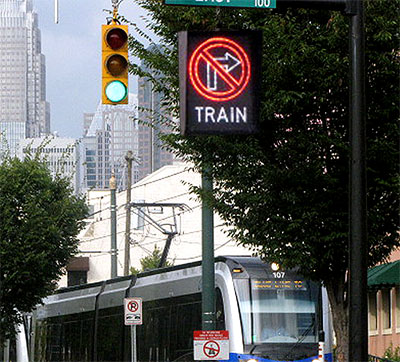
The Manual on Uniform Traffic Control Devices (MUTCD), published by the Federal Highway Administration (FHWA), establishes national standards for traffic control devices. As of the date of this article’s publication, the current federal edition is the 11th Edition with Revision 1, dated December 2025 and effective March 5, 2026.
MUTCD standards for blank-out signs depend on the message and intended application. A conditional turn restriction, for example, may involve different provisions than a warning at a light-rail crossing.
When reviewing a proposed installation, determine:
- Whether the MUTCD addresses the intended traffic control message
- Whether an applicable standard sign design or designation exists
- What requirements determine the sign’s placement, appearance, and operation
- Whether state or local agency requirements add specifications
For example, the MUTCD identifies activated blank-out signs for certain turn restrictions at grade crossings, including the R3-1a (NO RIGHT TURN ACROSS TRACKS) and R3-2a (NO LEFT TURN ACROSS TRACKS) designs.
Important: A manufacturer’s sign configuration does not, by itself, establish compliance with MUTCD standards. The complete application and installation must satisfy applicable requirements.
Learn How
LED Blank-Out Signs Prevent Traffic
Accidents
3 – What Sign Dimensions, Colors, and Symbols Are Required?
Once the message and application are established, the next step is determining the sign’s physical characteristics. Depending on the application, MUTCD standards may govern sign dimensions, colors, symbols, legends, and other design elements.
FHWA’s Standard Highway Signs publication provides detailed designs for standardized traffic signs. Its 11th Edition sign designs are being released in phases.
Before requesting a quote, identify:
- Required sign dimensions and message layout
- Applicable sign designation or approved artwork
- Required colors, symbols, and lettering
- Mounting location and available installation space
- Any agency-specific construction or material requirements
Providing an existing sign drawing, approved design, or project specification can help Signal-Tech identify an appropriate configuration and reduce unnecessary revisions.
Signal-Tech Tip: Look for the MUTCD alphanumeric code on Signal-Tech products to see illuminated signs that align with MUTCD guidelines. You can also enter unique MUTCD alphanumeric codes into the search bar on Signal-Tech.com to find products that align with MUTCD guidelines.
4 – How Will the Sign Activate and Remain Readable?
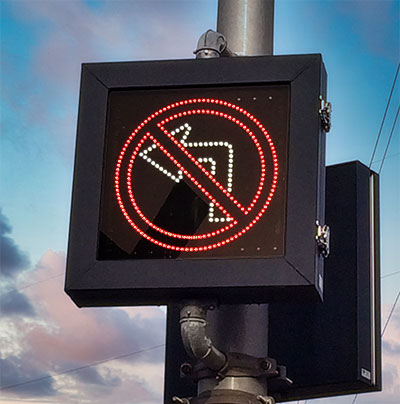
An LED blank-out sign must communicate its message clearly when activated and appear blank when inactive. Beyond message design, engineers and specifiers should consider activation, visibility, and operating conditions.
Activation and Controls
Determine what activates the sign, such as a traffic signal controller, railroad warning system, or other approved control source. Then, identify the required control interface, activation sequence, deactivation conditions, and response to power or control failures.
Daytime and Nighttime Visibility
The displayed message must be readable under anticipated operating conditions. Consider viewing distance, approach speed, ambient lighting, contrast, and brightness control.
Power and Installation
Identify available electrical service, required voltage, mounting provisions, environmental exposure, and any agency requirements for equipment or enclosures. These details help determine whether a proposed sign configuration is appropriate for the installation.
Discover
Signal-Tech’s Illuminated Lane Control
& Traffic Signage
5 – What Information Should Be Provided When Requesting a Quote?
A detailed quote request helps move a project from a proposed traffic control application to an appropriate sign configuration. Before contacting Signal-Tech, gather as much of the following information as possible:
Application
Where the sign will be installed and what traffic condition it addresses
Message
Exact wording, symbols, colors, and any applicable MUTCD sign designation
Dimensions
Required sign size, drawings, or approved artwork in a vector format
Controls
How the sign activates, deactivates, and interfaces with existing equipment
Electrical Requirements
Available voltage, power source, and related specifications
Installation
Mounting location, orientation, and environmental conditions
Agency Requirements
Applicable state DOT standards, local specifications, and project documents
Not every detail needs to be finalized before requesting assistance. However, providing as much information as possible gives Signal-Tech a better starting point for identifying a suitable sign configuration.
From MUTCD Standards to an Appropriate Sign Configuration
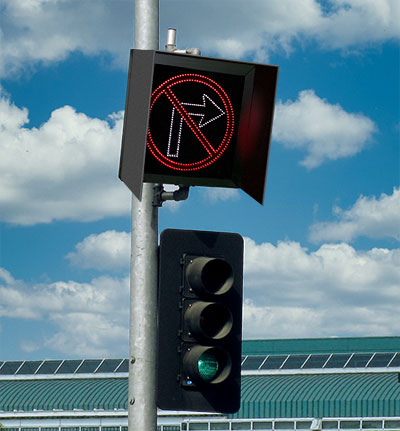
Choosing the right LED blank-out traffic sign starts with understanding your application and its requirements. From message design and electrical specifications to mounting and controls, there are several details to consider.
Signal-Tech can help you work through those details and identify a sign configuration that fits your project. Whether you’re replacing an existing sign or planning a new installation, our team can help you find the right solution while keeping applicable MUTCD standards and agency requirements in mind. Final approval and compliance remain the responsibility of the agency having jurisdiction.
Request a Quote
for Your Next Transportation
Blank-Out Sign
Contact
Signal-Tech’s Transportation
Blank-Out Signage Experts
Frequently Asked Questions
What Are MUTCD Standards for Blank-Out Traffic Signs?
MUTCD standards establish national requirements for traffic control devices. For blank-out signs, applicable provisions depend on the displayed message, sign design, placement, and intended operation.
What Is the Difference Between an LED Blank-Out Sign and a Standard Traffic Sign?
A standard traffic sign displays its message continuously. An LED blank-out sign displays a predetermined message only when activated, allowing communication to correspond with specific traffic conditions.
Can LED Blank-Out Signs Meet MUTCD Standards?
Yes, blank-out signs can be used in applications addressed by the MUTCD. However, conformity depends on the specific message, design, operation, installation, and applicable agency requirements.
What Information Is Needed to Quote an LED Blank-Out Sign?
Useful information includes the intended application, message or sign designation, dimensions, colors, control requirements, electrical service, mounting details, and agency specifications.
Which MUTCD Edition Should Be Used?
The current federal edition is the 11th Edition with Revision 1, dated December 2025. Project teams should also verify applicable state MUTCD provisions and requirements established by the agency having jurisdiction.


