Interactive Teller Machines (ITMs), sometimes called Video Teller Machines (VTMs), have changed how banks and credit unions serve drive-thru customers. By connecting customers with remote tellers while also supporting self-service transactions, ITMs can extend service hours beyond the traditional branch experience.
However, implementing new technology is only part of the equation. Customers still need to know where to go, which lane provides the service they need, and whether that service is currently available. The right bank signage provides that critical communication, helping financial institutions create a smoother ITM experience from the moment customers enter the drive-thru.

Explore
Signal-Tech’s Bank & Credit Union
Drive-Thru Solutions
Why ITMs Have Transformed Financial Drive-Thrus
ITMs combine many traditional ATM functions and services with the ability to connect customers to remote banking personnel through video. This gives banks and credit unions greater flexibility when determining how and when drive-thru services are provided.
ITMs can also create new possibilities for branch modernization and drive-thru operations. Teller services may be centralized, drive-thru hours may extend beyond branch lobby hours, and individual lanes may provide different services throughout the day. Those advantages create a new challenge: clearly communicating those options to customers.
Why ITMs Still Need Clear Bank Signage
A customer approaching a traditional financial drive-thru might encounter several lanes offering different services. Add ITMs, ATMs, remote tellers, commercial banking, and night deposit services to the mix, and choosing the correct lane can become surprisingly complicated.
Clear bank signage can immediately answer important questions:
- Is this lane open or closed?
- Is this an ITM or ATM lane?
- Is a remote teller currently available?
- Which lane provides the service I need?
- Is this service available after normal branch hours?
Answering those questions before customers enter a lane reduces uncertainty and helps them make faster, more confident decisions.
Discover Signal-Tech's
Specialty & Multi-Use Drive-Thru
Lane Signs
Directing Customers to the Right ITM LaneDirecting Customers to the Right ITM Lane
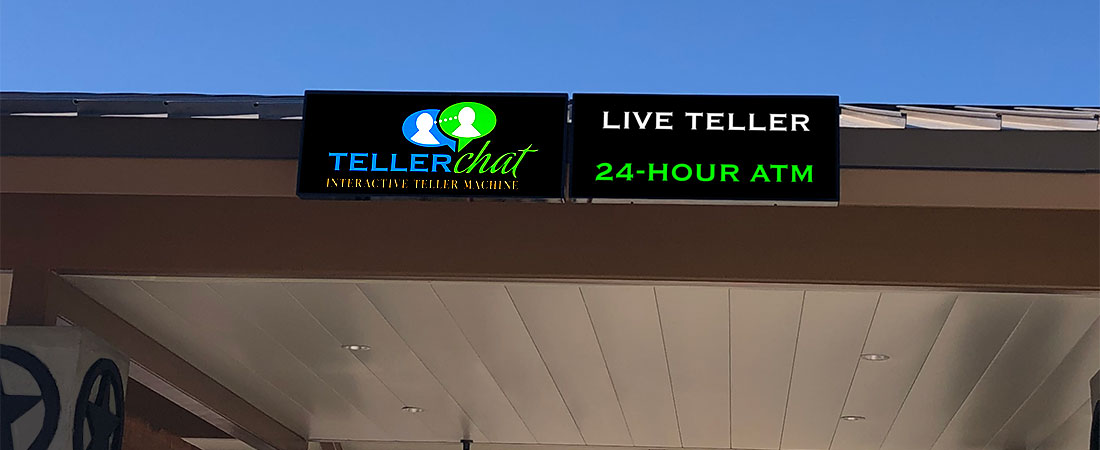
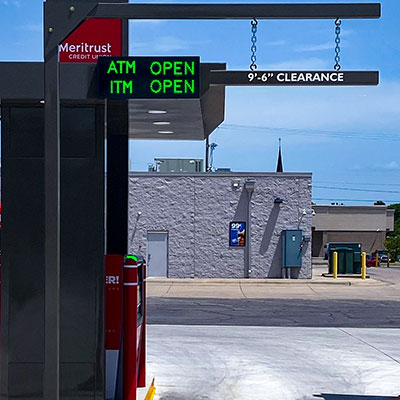
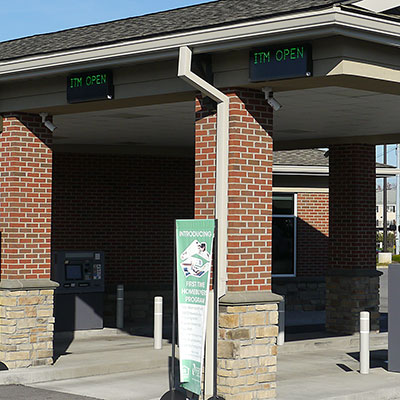
Effective drive-thru wayfinding begins before customers even reach the ITM. Illuminated signs can identify individual lanes using messages such as ITM, Interactive Teller, Video Teller, ATM, Live Teller, Commercial, Open, and Closed. Directional arrows and lane-status indicators can provide additional guidance.
Placing highly visible bank signage near drive-thru decision points gives customers time to identify the appropriate service and choose the correct lane, rather than making last-second lane changes. That clearer traffic pattern can help reduce confusion, improve lane utilization, and support more efficient drive-thru traffic flow.
Communicating ITM Availability in Real Time
ITM availability may not always match traditional branch hours. Remote tellers can operate from centralized locations, allowing financial institutions to provide services when employees are not physically present at a branch. That makes accurate lane-status communication especially important.
Network-connected bank signage can reflect ITM and teller availability without requiring an employee inside each branch to manually control the signs. Scheduled messaging can also help ensure lane status corresponds with established service hours.
Learn About
Signal-Tech’s Smart Sign System for Controlling Signs Remotely
Supporting First-Time ITM Users
Not every customer approaching an ITM will immediately understand how it differs from a traditional ATM or teller lane. Dynamic LED displays can supplement lane identification with simple instructions, service information, or other messaging designed to make the technology easier to understand.
For financial institutions rolling out ITMs, bank signage becomes part of customer education. Clear messaging can identify the new service, explain where customers should go, and help remove uncertainty before a transaction begins. That added clarity can also support ITM adoption by helping customers become more comfortable with unfamiliar self-service banking technology.
Improving Traffic Flow Around ITM Lanes
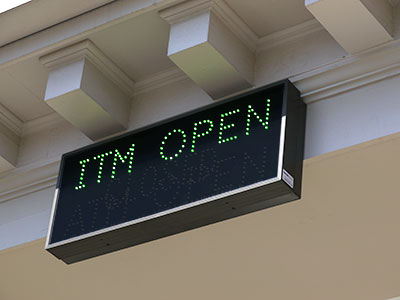
Slow transactions don’t always cause drive-thru congestion. Sometimes customers simply enter the wrong lane or hesitate while deciding where to go. Clear lane identification, directional information, and real-time status messages help customers make those decisions earlier.
When bank signage clearly distinguishes ITM, ATM, live teller, commercial, and other specialty lanes, customers can move toward the appropriate service without much guesswork. That supports smoother traffic flow while helping financial institutions make better use of available drive-thru lanes.
Supporting After-Hours and Self-Service Transactions
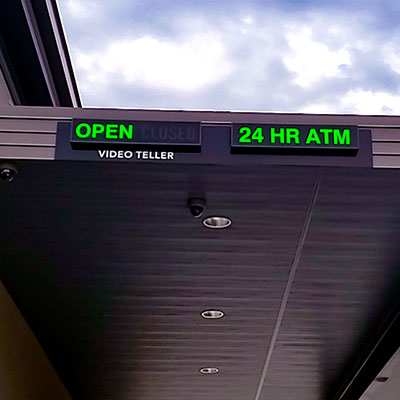
The modern banking experience doesn’t always follow traditional branch hours. ATMs may operate 24/7, while ITMs and video teller services may be available during extended hours that differ from the branch’s normal operating hours. A branch lobby may be closed even though multiple drive-thru services remain available.
Illuminated bank signage helps communicate those distinctions clearly. Customers arriving after hours can quickly determine which services are still available rather than assuming the entire drive-thru is closed.
Choosing Bank Signage for ITM Drive-Thru Lanes
ITM installations can differ significantly between financial institutions, so signage should reflect the specific operation of each drive-thru. When selecting bank signage, consider:
- Lane configuration and traffic flow
- ITM and ATM locations
- Viewing distance and sign placement
- Daytime and nighttime visibility
- Open/closed and service-status messaging
- Remote or centralized sign control
- Extended drive-thru service hours
- Dynamic messaging requirements
- Future branch technology upgrades
The goal is to create a communication system that complements the ITM instead of treating signage as an afterthought.
Modern Financial Technology Needs Modern Communication
ITMs can transform how financial institutions deliver drive-thru service, but customers still need clear information to take advantage of that technology.
Effective bank signage connects the physical drive-thru environment with modern banking technology by identifying services, directing customers, communicating availability, and supporting efficient traffic flow.
For banks and credit unions investing in ITMs, illuminated LED signs and remotely controlled smart signs can help turn new technology into a drive-thru experience customers can understand and use with confidence.
If you’re planning an ITM rollout, contact the knowledgeable Signal-Tech sales team or request a quote to find the right bank signage for your branch modernization!
Frequently Asked Questions
What Is an Interactive Teller Machine?
An Interactive Teller Machine, or ITM, combines self-service banking capabilities with video communication that connects customers with remote tellers. ITMs can provide access to teller-assisted transactions without requiring the teller to be physically located at the branch.
What Signs Should Banks Use with ITMs?
ITM drive-thru lanes may benefit from illuminated ITM identification signs, Open/Closed signs, directional signs, lane-status indicators, ATM signs, and programmable displays for instructions or changing service information.
How Does Bank Signage Improve the ITM Experience?
Clear bank signage helps customers identify ITM lanes, understand available services, determine whether a lane is open, and navigate the drive-thru with less confusion.
Can LED Signs Be Controlled Remotely for ITM Lanes?
Yes. Network-connected Smart Signs can provide centralized control of LED drive-thru signage, allowing financial institutions to coordinate lane messaging with ITM availability, remote teller schedules, and extended service hours.
Are ITMs and Video Teller Machines the Same Thing?
The terms are often used to describe similar technology that combines self-service banking with remote teller access via video. Individual financial institutions and technology providers may use different terminology.