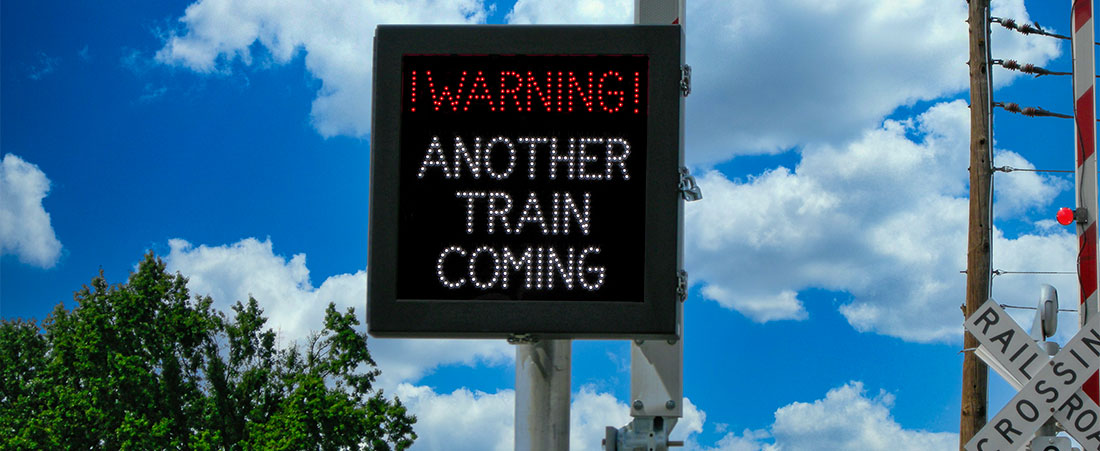
As cities expand public transportation networks, light rail safety is more important than ever. Light rail systems move thousands of passengers each day, but they also introduce unique challenges at intersections with roadways, pedestrian crossings, bicycle paths, and busy urban streets.
Traditional railroad warning signs continue to play an important role, but transportation agencies need solutions that react to changing conditions in real time. That’s where LED blank-out signs make a difference. By displaying highly visible warnings only when needed, they help motorists, pedestrians, and cyclists make safer decisions while improving traffic flow around rail crossings.
Far more than illuminated displays, LED blank-out signs have become an important component of modern light rail safety strategies. They provide dynamic communication, integrate with train detection systems, and support transportation agencies working to reduce collisions, improve visibility, and create safer crossings for everyone.

Discover
Signal-Tech’s Rail Industry Solutions
Why Light Rail Safety is Becoming Increasingly Challenging
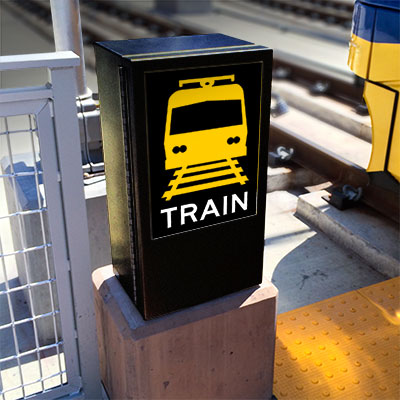
Urban transportation is evolving rapidly. Communities are expanding light rail systems to reduce congestion, improve mobility, and encourage public transit use. At the same time, roads are becoming busier, drivers are more distracted, and pedestrian traffic continues to increase. These changing conditions make light rail safety more complex than simply warning drivers that railroad tracks are ahead.
Every crossing requires motorists, pedestrians, cyclists, trains, and traffic signals to work together safely. Even a few seconds of uncertainty can increase congestion, delay emergency vehicles, or contribute to dangerous conflicts between trains and roadway traffic.
As many municipalities pursue Vision Zero initiatives to eliminate serious traffic injuries and fatalities, improving communication at rail crossings has become a priority.
Learn Why
LED Traffic Signs Are an Indispensable
Part of Vision Zero
Why Traditional Warning Signage Falls Short
Conventional railroad advance warning signs and static traffic signs communicate the same message every hour of every day. They cannot:
- Indicate when a train is approaching.
- Notify drivers that a crossing is temporarily closed.
- Adapt to changing traffic conditions.
Although static signs remain an essential part of light rail safety, they rely on motorists recognizing and reacting appropriately every time they encounter them. Unfortunately, distraction, weather, nighttime conditions, and visual clutter can reduce their effectiveness.
LED blank-out signs address these challenges by displaying bright, unmistakable warnings only when needed, helping critical messages stand out from the surrounding environment.
How LED Blank-Out Signs Improve Light Rail Safety
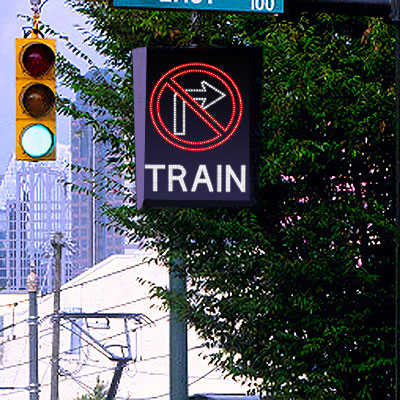
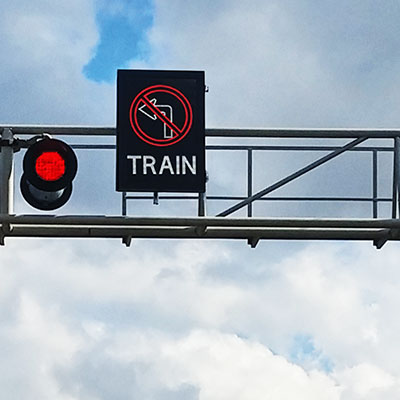
Unlike conventional signs, LED blank-out signs remain completely dark until activated by a train detection system or traffic controller. When a train approaches, the sign immediately illuminates with a clear warning message or symbol, such as:
- Another Train Coming
- Light Rail Symbols
- Do Not Enter
After the train clears the crossing, the sign automatically returns to its blank state.
This dynamic operation is one of the biggest advantages for light rail safety because it delivers timely information exactly when motorists and pedestrians need it without adding unnecessary visual clutter during normal traffic conditions.

Download
the Signal-Tech Transportation
Industry Solution Catalog
Better Visibility Leads to Faster Driver Responses
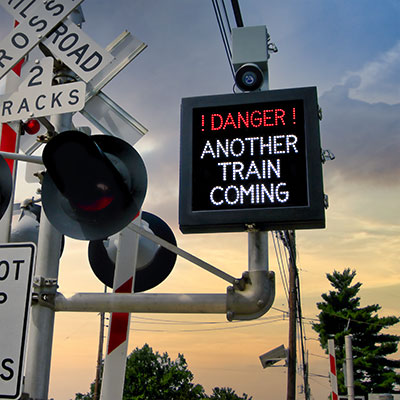
One of the greatest strengths of LED blank-out technology is visibility. Whether it’s bright afternoon sunlight, heavy rain, blowing snow, fog, or nighttime conditions, LED signs provide exceptional brightness, contrast, and readability compared to conventional reflective signs.
Because warnings are illuminated only during active events, drivers are more likely to notice them and respond appropriately. This improved visibility supports light rail safety by reducing hesitation, minimizing last-second lane changes, and encouraging earlier driver reactions before vehicles reach the crossing.
Many LED blank-out signs are also designed to meet applicable MUTCD requirements, helping agencies maintain consistency while enhancing visibility.
Protecting Pedestrians, Cyclists, and Drivers
Modern transportation planning extends beyond vehicles. Today’s rail corridors often include sidewalks, shared-use paths, bicycle lanes, and transit stations, bringing pedestrians and cyclists closer to rail crossings than ever before.
Dynamic warning signs improve light rail safety for every road user by providing highly visible alerts that are difficult to overlook.
Whether warning pedestrians not to cross (check out Signal-Tech’s LED “Another Train Coming” signs), preventing illegal turns across tracks, or directing vehicles away from an occupied crossing, LED blank-out signs help reduce conflicts before they become accidents. Better communication creates safer interactions across all modes of transportation.
Learn Why
Safer Crossings Start with an LED
Railroad Advance Warning Sign
Integrating with Intelligent Transportation Systems
LED blank-out signs are most effective when integrated into a larger intelligent transportation system (ITS). Many installations integrate directly with:
- Train detection systems
- Traffic signal controllers
- Transit Signal Priority (TSP)
- Active warning devices
- Central traffic management systems
- Remote monitoring platforms
By sharing real-time information between multiple systems, agencies can coordinate warnings, optimize signal timing, and improve overall light-rail safety throughout a transportation corridor.
Rather than functioning as standalone devices, LED blank-out signs become part of a connected infrastructure that helps manage traffic more efficiently. Because these systems communicate in real time, transportation agencies can respond more quickly to changing conditions while improving operational efficiency across the corridor.
Why Transit Authorities Are Choosing LED Blank-Out Signs
Transportation agencies continue investing in LED technology because it delivers benefits that extend beyond visibility. LED blank-out signs offer:
- Low power consumption
- Long operating life
- Reduced maintenance requirements
- Dynamic messaging
- Reliable performance in harsh weather
- Easy integration with existing transportation infrastructure
These advantages help improve light rail safety while lowering long-term operating costs and reducing maintenance interruptions.
Check Out
Signal-Tech’s Light Rail Crossing
Signals
Choosing the Right Light Rail Safety Signage
Every light rail crossing presents unique operational challenges. When evaluating LED blank-out signs, agencies should consider:
- MUTCD compliance
- Viewing distance
- Character height and readability
- Brightness in all lighting conditions
- Controller compatibility
- Integration with train detection systems
- Environmental protection ratings
- Long-term maintenance requirements
Selecting equipment designed specifically for transportation applications helps ensure dependable performance while supporting long-term light rail safety goals.
Safer Rail Crossings Start with Better Communication
When drivers, pedestrians, and cyclists receive immediate warnings, they can make better decisions before reaching the tracks. That reduces confusion, improves traffic flow, and creates a safer environment for everyone.
As communities continue investing in public transportation and smarter infrastructure, LED blank-out signs are becoming an increasingly important part of light rail safety strategies. Their ability to provide dynamic, highly visible warnings helps transportation agencies modernize crossings, reduce risk, and improve confidence across the transportation network.
Whether you’re planning a new light rail project or upgrading an existing crossing, contact the Signal-Tech sales team or request a quote to find the right LED blank-out sign solution for your application.
Frequently Asked Questions
What is an LED Blank-Out Sign for Light Rail Safety?
An LED blank-out sign remains dark until activated by a controller or train detection system. When activated, it displays a highly visible warning message or symbol to improve light rail safety.
How Do LED Blank-Out Signs Improve Light Rail Safety?
They provide real-time warnings that reduce driver confusion, improve visibility, and alert motorists, pedestrians, and cyclists only when a train is approaching.
Can LED Blank-Out Signs Integrate with Train Detection Systems?
Yes. Many LED blank-out signs integrate with train detection equipment, traffic signal controllers, and intelligent transportation systems to provide coordinated, real-time warnings.
Are LED Blank-Out Signs MUTCD Compliant?
Many models are designed to meet applicable MUTCD requirements. Agencies should verify compliance based on the specific application and jurisdiction.