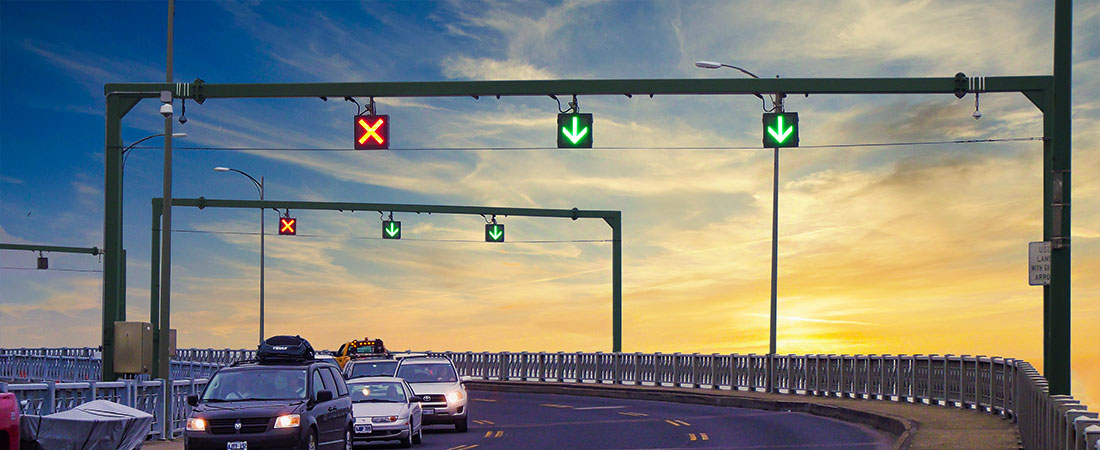
Urban populations continue to grow, and city infrastructures keep stretching to meet growing transportation needs. Consequently, managing traffic flow has become a top priority for planners, engineers, and municipalities. One often-overlooked weapon in the battle against congestion is illuminated traffic signs. Modern traffic signage is dynamic, smart, and essential to keeping vehicles moving smoothly through complex, congested areas.
Providing Real-Time Information at Decision Points
Traffic congestion is caused not just by the volume of vehicles on the road but also by the uncertainty of drivers behind the wheel. Gridlocked drivers typically face unexpected lane closures, inconsistent signal timing, accidents or obstructions, and poor signage.
Illuminated traffic signs help solve these issues by providing drivers with clear, real-time information at critical decision points. Whether mounted on highways, city streets, or parking facility entrances, these signs reduce hesitation and last-minute maneuvers. With high visibility and programmable messages, LED traffic signs reduce confusion and allow drivers to respond calmly and quickly, keeping traffic flowing even when conditions are less than ideal.

Download
Signal-Tech’s Illuminated
Traffic Signage Brochure
Creating Adaptive Responses to Changing Traffic
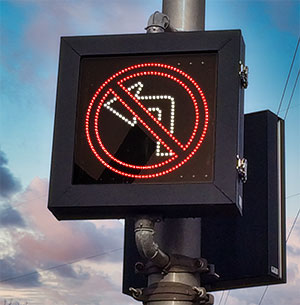
Modern traffic systems are super responsive, relying on integrated technologies, such as sensors, cameras, and centralized control centers. Illuminated traffic signs play a vital role in this ecosystem. Blank-out LED signs can display a single message, e.g., “No Left Turn” when conditions require it. However, modern LED traffic signs can change messaging instantly based on data from traffic flow sensors, weather monitoring systems, emergency alert networks, and transit or event management platforms.
For instance, if an accident blocks two lanes of a downtown street during rush hour, the control center can update LED traffic signs to redirect drivers to alternate routes, reducing backups and minimizing secondary accidents. This real-time flexibility makes illuminated signage cost-effective for enhancing an urban traffic management system without major infrastructure overhauls.
Supporting Multimodal Urban Transportation
Historically, controlling traffic in urban environments focused primarily on vehicles. However, today’s cities are more multimodal, balancing the needs of cars, public transit, bicycles, scooters, and pedestrians. LED traffic signals are uniquely positioned to support this transition in several ways, including:
- Transit Hubs: Illuminated signs at train and bus stations guide vehicles and passengers to drop-off zones, parking, and real-time schedule information.
- Bike and Pedestrian Zones: Signage warns motorists when shared spaces are in use or when pedestrian-only times are in effect.
- Parking Facilities: LED signs display spot availability, reducing circling behavior and idling.
This kind of coordination supports smoother transitions between different modes of transportation and encourages the use of mass transit by improving access and reducing friction.
Read How
Digital Signage Helps Bus Lanes
Enhancing Safety in Congested Areas
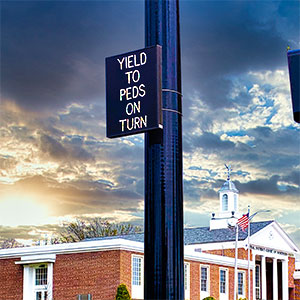
Traffic flow and safety must go hand in hand. In high-density environments, unclear signage or poorly lit signals can increase the risk of accidents, especially at night or in inclement weather. Illuminated traffic signs improve safety by offering high visibility in all lighting conditions, using bright LEDs to command driver attention quickly, enabling flashing or color-coded messaging to emphasize urgency, and supporting emergency evacuations and incident responses.
For instance, LED traffic signs near school zones or construction areas can automatically switch to alert mode during relevant hours, ensuring drivers adjust their behavior accordingly. In addition to protecting pedestrians, workers, and drivers, this proactive approach reduces congestion caused by accidents or slowdowns.
Learn How
Signal-Tech Serves the
Transportation Industry
Improving Driver Navigation in Complex City Traffic Flows
City drivers face a flood of information: GPS directions, signs, signals, pedestrians, cyclists, and other vehicles. When signage isn’t clear, it adds stress and delay. Illuminated traffic signs offer a solution by streamlining communication. They can highlight exact lane usage (e.g., left turn only, straight ahead, bus lane). Variable message signs can adapt for event traffic, helping visitors navigate unfamiliar routes. They can even help drivers recognize loading zones, curbside pickups, or deliveries. LED traffic signs reduce slowdowns caused by missed turns, last-second lane changes, or confusion at intersections by assisting drivers to make faster, more accurate decisions.
Preparing for the Future of Urban Mobility
The coming decades will change how cities move — autonomous vehicles, vehicle-to-infrastructure (V2I) communication, and AI-powered traffic management. Illuminated traffic signs will communicate with connected vehicles, display dynamic messaging based on AI predictions, respond to traffic density and flows, and integrate with ride-share and mobility platforms.
As cities continue to grow and urban congestion becomes a daily challenge, investing in tools that improve real-time communication with drivers is essential. Illuminated traffic signs are a practical, powerful, and scalable solution. By delivering timely information, adapting to changing conditions, and supporting multimodal mobility, they help cities reduce congestion, improve safety, and enhance the overall driving experience. LED traffic signs are quickly evolving from a “nice-to-have” commodity to a vital investment in a smart urban transportation strategy. Signal-Tech is an industry leader in LED traffic signs and is ready to help your municipality! Click here to learn more about our LED signs for traffic applications, and click here to contact our illuminated traffic signage experts!