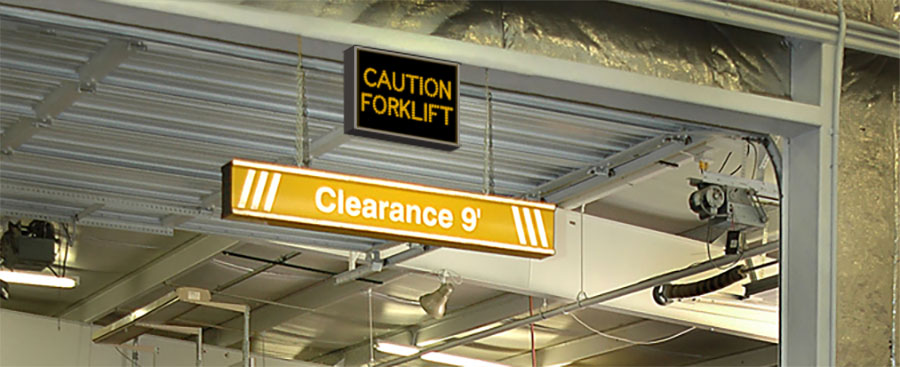
Many companies talk about creating a safety culture as if it were a single project with a finish line. The reality is it’s an ongoing process of shaping behaviors, attitudes, and environments so employees naturally choose the safe path. Training sessions, policies, audits, etc., are essential, but one element often flies under the radar: illuminated signage. Whether it’s illuminated exit markers, programmable LED boards, or high-visibility hazard alerts, these glowing cues quietly drive safer daily decisions.
The Power of Visual Cues
Humans are drawn to visual cues and process them far faster than text. In high-risk environments where seconds matter, a bright, legible signal can make the difference between a near-miss and a recordable incident. LED signs cut through noise, poor lighting, and mental fatigue to deliver messages employees can act on instantly. That’s why they’re indispensable in safety culture. They embed safety prompts into the very spaces where risks exist, not just in the pages of a safety manual.

Discover
Signal-Tech’s Illuminated Workplace
Safety Signs
More Than Compliance: Establishing an Emotional Connection
Dale Lesinski’s Safe 4 the Right Reasons program emphasizes that employees already know how to work safely. However, the key is motivating them to want to do so. Illuminated signage reinforces that motivation by connecting procedures to personal stakes. A sign that reads “Stay clear — your family counts on you” in bold illuminated letters does more than warn; it resonates. When organizations use LED signage in tandem with training, they’re not just posting rules, they’re creating a safety culture built on personal meaning.
LED Signs are Like a 24/7 Coach Without the Payroll
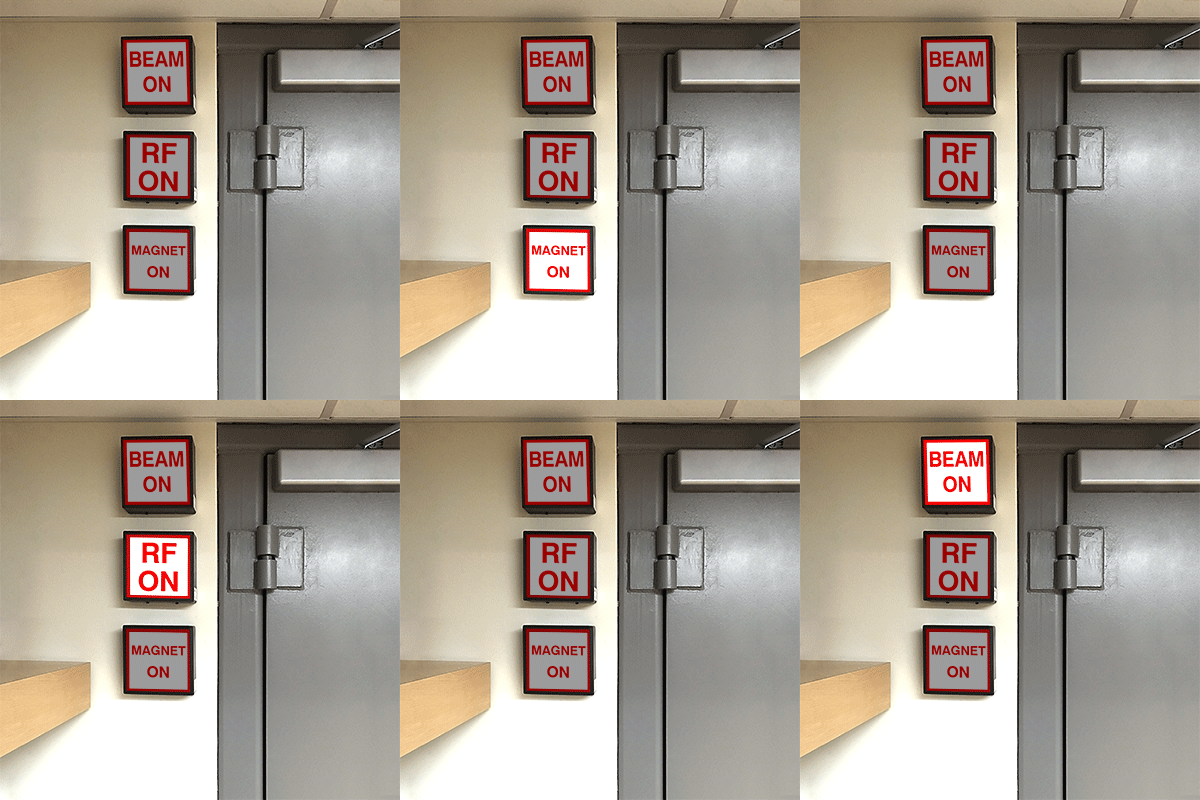
Supervisors can’t be everywhere at once, but illuminated signs can. They operate as a silent, tireless coach, reminding employees of critical behaviors long after the training ends. For example, an LED sign near a machine may scroll through lockout/tagout steps during shift changes, or a backlit panel might highlight the day’s top hazard in a construction zone. These ever-present cues are one of the most cost-effective tools for creating a safety culture because they scale without adding staff.
However, an LED sign is only as effective as the message it conveys and where it is placed. Maximizing its impact includes:
- Matching the message to the moment. Put illuminated signs where a decision must be made — entry points, intersections, near switches, beside walkways.
- Using positive framing. According to Safe 4 the Right Reasons, encouraging phrases like “Protect your future today” outperform punitive warnings.
- Refreshing frequently. Just as training gets stale, static signs can fade into the background. Programmable LEDs let you rotate messages and maintain attention.
- Integrating brand and culture. When signs reflect company colors and safety slogans, they reinforce identity while creating a safety culture employees recognize as their own.

Download
Signal-Tech’s Workplace Safety
Product Brochure
Make the Invisible Visible
A hidden advantage of illuminated signage is its ability to highlight changing conditions. A plant floor or warehouse may have different hazards in the morning than in the afternoon. A programmable LED message board can instantly display updated warnings, while a color-coded indicator dot can indicate when an area is off-limits. This adaptability keeps information current and credible — critical for creating a safety culture where workers trust the signals they see.
Linking Signage to Safety Metrics
Organizations committed to creating a safety culture should measure how illuminated signage contributes to outcomes. A few common metrics include:
- Incident reduction. Compare near-misses before and after installing illuminated signs.
- Employee surveys. Ask whether the signs improve awareness and if messages resonate personally.
- Behavioral observations. Supervisors watch whether workers follow procedures more consistently at sign-posted locations.
These data points can help refine LED sign content, placement, and design, turning illuminated signage from a cost center into a measurable driver of safety performance.
Integrating Safe 4 the Right Reasons Fits with Illuminated Signage
LED signage and Lesinski’s four motivators are natural allies. His framework makes safety personal, and lighted signage makes it present. Together, they transform abstract commitments into real-time behaviors. Imagine an LED sign at a warehouse door cycling through the four motivators — Self, Family, Co-workers, Future — next to hazard alerts. Workers see not just what to do but why, which is the essence of safety culture.
Learn About
Signal-Tech’s Illuminated Signage for
Facilities with Overhead Doors
However, some may worry that illuminated signs are too expensive. They’re often more durable and cost-effective than static signs because they can be updated without reprinting. Energy-efficient LEDs keep operating costs low, and the injury-prevention payoff dwarfs the initial investment. When framed as part of creating a safety culture, not just a decorative upgrade, budget approvals come easier.
A Culture Employees Can See
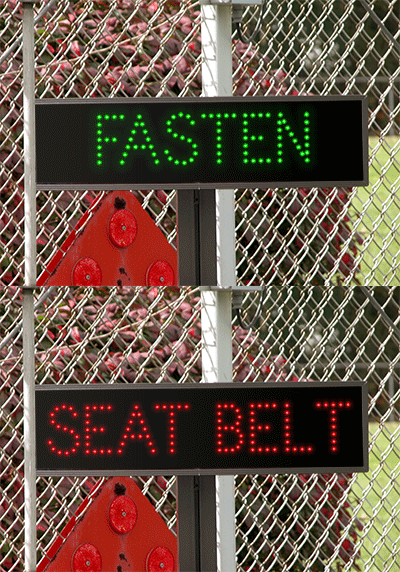
Ultimately, creating a safety culture means embedding safety into everyday work, not just occasional meetings. Lighted signage does this elegantly. It reminds, guides, and motivates without nagging. It works when supervisors are busy and when daylight fades. It can even celebrate successes, e.g., “Zero Incidents This Month!” to reinforce positive behaviors.
Safety isn’t just about policies and procedures; it’s about shaping choices in real time. LED signage is the quiet catalyst that makes that possible. By integrating illuminated cues with training programs such as Safe 4 the Right Reasons, organizations go beyond compliance to true culture change. In the journey of creating a safety culture, illuminated signs aren’t just helpful; they’re the unsung heroes lighting the way. Ready to learn more about how LED signs can improve safety in your workplace? Contact Signal-Tech today!