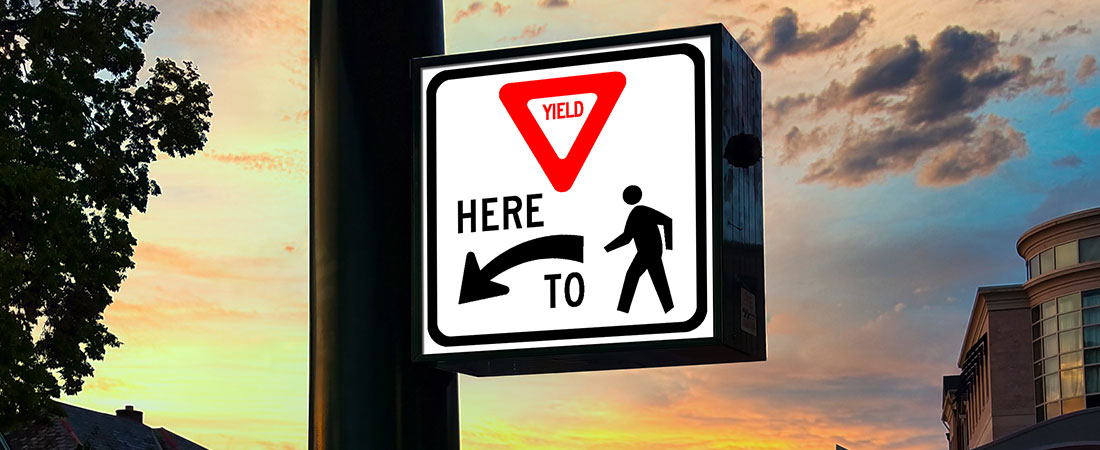
Today’s roads are filled with more types of traffic than ever before. Cars, trucks, SUVs, delivery vehicles, bikes, and pedestrians share the same streets, creating a complex infrastructure where being both highly aware and highly visible is critical to safety. While everyone benefits from safer crossings, certain groups face greater risks when navigating busy streets.
Children walking to school, bicyclists crossing from trails to roads, and senior citizens walking or using electric-powered scooters are vulnerable road users because they don’t have the encompassing protection of a vehicle and may travel and cross intersections more slowly. Improving driver awareness in these situations is essential, and illuminated pedestrian crossing signs are an effective solution for communities focused on pedestrian safety.
Why Are Vulnerable Road Users at Greater Risk on Today’s Roads?
Vulnerable road users face greater risk on roadways because they lack physical protection and are often harder for drivers to see in busy traffic environments. Improving safety for these groups is a major focus of transportation planners and federal initiatives, such as the FHWA Pedestrian and Bicycle Safety Program.
It comes as no surprise that children can sometimes act erratically. That erratic behavior can become dangerous when approaching a crossing, making them particularly vulnerable. Bicyclists enter intersections at higher speeds than pedestrians, but are still a small object in a driver’s vision field. Older adults may take longer to cross multi-lane roadways. All of these factors increase the risk of incidents involving pedestrians, cyclists, and vehicles. When drivers recognize a crossing earlier and anticipate pedestrian activity, the chance of a safe interaction increases significantly.

Explore
Signal-Tech’s Traffic and Roadway
Product Catalog
What Are Some Visibility Problems at Pedestrian Crossings?
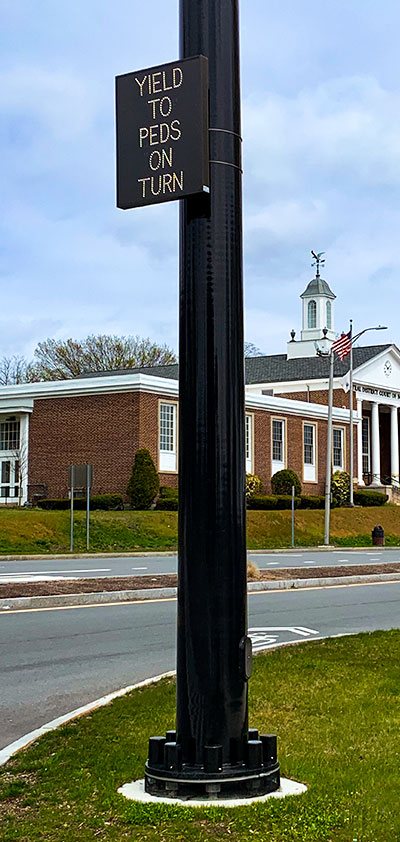
Traditional, single-message signs are typically found at pedestrian crossings. Drivers may overlook this type of signage due to repeated exposure. Driver distraction and reduced attention are contributing factors in many pedestrian crashes, according to NHTSA pedestrian safety data.
These traditional pedestrian warning signs use reflective materials to improve nighttime visibility. However, during daylight hours, they can blend into traffic flows and the general roadway environment. Drivers who frequently travel the same routes may fail to notice these signs over time.
This reduced awareness becomes a problem at mid-block crossings, trail intersections, and wide suburban roads where drivers may not expect pedestrian activity. Illuminated pedestrian crossing signs address this challenge by introducing bright — sometimes flashing — LEDs that immediately capture driver attention.
Do Illuminated Pedestrian Crossing Signs Improve Driver Awareness?
Yes. They improve driver awareness by using superbright LEDs that garner drivers’ attention to alert them to the presence of pedestrians or cyclists.
The increased brightness of LED signs helps them stand out from surrounding traffic signs and visual clutter. Drivers approaching the crossing receive a stronger visual signal to slow down and prepare to yield. In some instances, these signs can be paired with push-button activation or pedestrian detection systems. When someone approaches the crossing, the sign can illuminate or flash, providing a clear warning to approaching traffic that someone may enter the roadway.

Discover
Signal-Tech’s Full Line of Traffic
and Roadway Solutions
Why Are Illuminated Pedestrian Crossing Signs Important Near Schools?
These signs help protect children by increasing driver awareness in school zones where pedestrian activity is common.
Students walking or biking to school frequently cross roads during busy morning and afternoon traffic periods. Because children can be unpredictable and they’re smaller in stature, drivers may have difficulty spotting them quickly. Installing these signs near school crossings reinforces the notion that there is pedestrian traffic and encourages drivers to slow down as they approach the crosswalk. The bright LED signs create a clear visual signal that pedestrians may be entering the roadway.
How Do Illuminated Pedestrian Crossing Signs Help Protect Bicyclists?
Illuminated pedestrian crossing signs improve cyclist safety by alerting drivers to potential bicycle traffic at road crossings.
Many bike trails and shared-use paths intersect with roadways where drivers may not expect cyclists. Riders approaching a crossing can appear suddenly, especially if trees, shrubs, curves, or parked vehicles limit visibility. By installing illuminated warning signs at these intersections, communities can warn drivers that bike trail users may be crossing ahead. This additional visibility helps reduce the potential for accidents between vehicles and cyclists at these high-risk locations.
Learn How
Illuminated Signs Help to Reduce
Roadway Fatalities
Why Do Older Adults Benefit from Illuminated Pedestrian Crossing Signs?
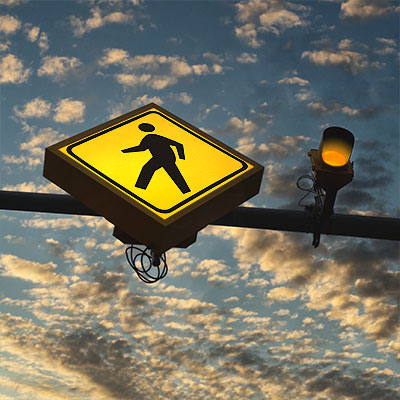
Seniors benefit from these signs because their added visibility gives drivers more time to react to slower foot traffic at crossings.
Older adults may require additional time to cross a roadway safely due to mobility limitations or reduced walking speed. In busy traffic environments, this extra time can create challenges if drivers do not recognize the crossing quickly. These signs provide earlier visual cues that someone may be entering the crosswalk. This helps drivers slow down sooner and yield safely as seniors cross.
Where Should Illuminated Pedestrian Crossing Signs Be Installed?
Illuminated pedestrian crossing signs are most effective in locations where pedestrian activity and vehicle traffic intersect unexpectedly.
Common installation locations include school zones, trail crossings, transit stops, and mid-block crosswalks where pedestrians regularly cross outside traditional intersections. By strategically placing illuminated warning signs in these areas, municipalities can significantly improve visibility and driver awareness without major infrastructure changes.
Improving Pedestrian Crossings Without Major Construction
Illuminated pedestrian crossing signs provide a practical safety upgrade that can be installed without extensive roadway reconstruction. Programs like the Safe Transportation for Every Pedestrian initiative encourage communities to deploy proven safety countermeasures that improve pedestrian visibility at crossings.
Major road construction projects, such as intersection redesigns or traffic signal installations, often require years of planning and significant funding. In contrast, installing illuminated signage can be done more quickly while still delivering meaningful safety improvements. For municipalities seeking cost-effective ways to improve pedestrian and cyclist safety, these systems offer a highly visible solution that encourages drivers to slow down and stay alert.
Improving safety for vulnerable road users requires solutions that help drivers recognize potential accidents before they occur. By increasing visibility and drawing attention to active crossings, illuminated warning and crossing signs help create safer interactions between vehicles, pedestrians, and cyclists. Contact Signal-Tech’s illuminated traffic and roadway signage experts to learn more!